
Developing and producing the virtual simulation training system
The process of bringing together oil, associated natural gas, and other products that are produced by dispersed oil wells is referred to as oil and gas gathering and transportation. This process is referred to by the term oil and gas gathering and transportation. The extraction of oil and gas from their respective ores is impossible without this process. As a component of the overarching production process, qualified oil and natural gas are sent off to refineries and users of natural gas, respectively, after first undergoing the necessary treatments and primary processing steps.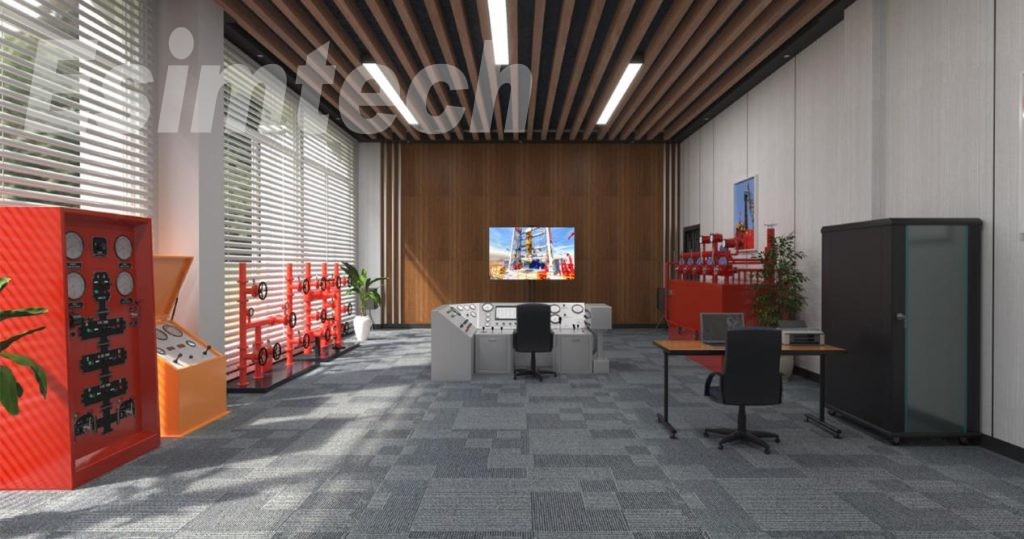
The procedure entails a number of processes, the most important of which are the separation of oil and gas, the metering of oil and gas, the dehydration of crude oil, the purification of natural gas, the stabilization of crude oil, and the recovery of light hydrocarbons. The process of collecting oil and gas and then transporting it to locations where it is required is one that is fraught with challenges and obstacles at every turn. It calls for the utilization of a wide variety of pieces of machinery and processes, many of which are carried out both beneath the ground and on the surface of the ground.
Esimtech is in charge of developing and producing the virtual simulation training system that is utilized for the gathering and transportation of oil and gas. This system is used by Esimtech. If they use this system, trainees will not only be able to learn the fundamentals of the process of oil and gas collection and transportation, but they will also be able to learn the techniques that are involved in the process. Esimtech's work on a new training system for the production and transportation of oil and gas will primarily focus on the creation of three distinct types of simulations. These simulations will be as follows:
The first kind is a representation in computer form of the procedure that is used to create gas.
The all-encompassing simulation system for gas production incorporates a wide range of specialized knowledge and technology, such as that of petroleum engineering, oil and gas storage and transportation, computer technology, virtual reality technology, and a great deal of other technologies as well. This allows the system to accurately model all aspects of the gas production process. The fact that the training time of the trainees can be greatly shortened thanks to the large screen's capability of displaying the working status of the equipment, in addition to the fact that the entire process is clear and simple to comprehend, makes it possible for the trainees to have a deeper and more comprehensive understanding of the subject matter.
How Important Is It to Have a Good Gas Production Simulation System When You're Running the Entire Process?
Trainees have the opportunity, as a result of the training system, to gain an understanding of the internal structure and operating principles of a variety of gas production equipment, and to become familiar with the typical stations and procedures found within the block. Additionally, trainees have the opportunity to become familiar with the typical stations and procedures found within the block. In addition, trainees are offered the chance to become acquainted with the standard stations and procedures that are located within the block.
The training is broken down into multiple levels, each of which can be utilized for the training of a different type of worker, specifically junior workers, intermediate workers, senior workers, technicians, and senior technicians respectively.
The second kind is known as the Simulation System for Oil and Gas Gathering and Transportation. It simulates oil and gas gathering as well as transportation. The decade of the 1980s saw its conception.
An electronic sand table, a process board, and a touch screen make up the medium for the oil and gas gathering and transportation simulation system. The environment is formed by the combined efforts of these various components. This system also makes use of a computer, virtual reality, and other technological means in order to accurately simulate the entirety of the process of oil and gas storage and transportation, beginning at the wellhead and continuing all the way to the joint station, then continuing on to the oil depot, and finally ending with the oil and gas export. This simulation begins at the wellhead and continues all the way to the joint station, then continues on to the oil depot, and finally ends with the oil and gas export. The purpose of this system is to create an accurate simulation of the entire process. The professional skill appraisal standard in the field of oil and gas gathering and transportation served as the foundation for the development of the oil and gas gathering and transportation simulation system, which was then developed in conjunction with the actual situation that existed on the site. This was done in order to ensure that the system accurately reflected the conditions that were present.
This was done in order to guarantee that the system gave an accurate representation of the conditions that were taking place at the time.
What part the modeling and simulation system plays in the gathering and distribution of oil and gas
The system that is used to simulate the gathering and transportation of oil and gas is able to simulate not only the primary process links but also the flow and the devices that are used during the processing itself. The collection of oil well products, the separation of gas and liquid, the dehydration of crude oil, the stabilization of crude oil, the treatment of sewage, and the storage and transportation of oil and gas are all included in these processes. However, this list is not exhaustive. The training system is able to simulate the operations of the combined station's five major components, which are the oil depot, the LNG terminal, the long-distance crude oil pipeline pump station, and the pressurized sub-transmission stations. These components are listed in alphabetical order. Because of this, it is feasible for technicians to participate in training that includes the modeling of real-world processes.
The Oil Recovery Simulator is categorized as the third category of available choices to select from.
The significance of education that is predominately based on simulated oil recovery procedures
Workers who are involved in oil production and workers who are involved in water injection can both benefit from the oil production process simulation training system in order to achieve a variety of skill training and target assessment goals. The oil production process simulation training system is designed to help achieve these goals.
1. The system is only capable of displaying a particular part of a single device at any given time.
2. While the system is in the process of learning, it is able to take into account errors that have been intentionally programmed into it.
3. The capability of the system to judge and score the trainees' operations automatically and to print out the final scores contributes significantly to an increase in the effectiveness of the training. Both of these features allow the system to print out the final scores.
4. The system is able to effectively compensate for the shortcomings of the current training system; not only does it have low costs of operation and maintenance, but it can also prevent students from causing damage to the training equipment as a result of their improper use of the equipment. 5. The system is able to effectively compensate for the shortcomings of the current training system. 6. The system is able to effectively compensate for the shortcomings of the current training system. 7. 4.5. The system is capable of effectively compensating for the deficiencies of the training system that is currently in place.6. The system is capable of effectively compensating for the deficiencies of the training system that is currently in place.
